
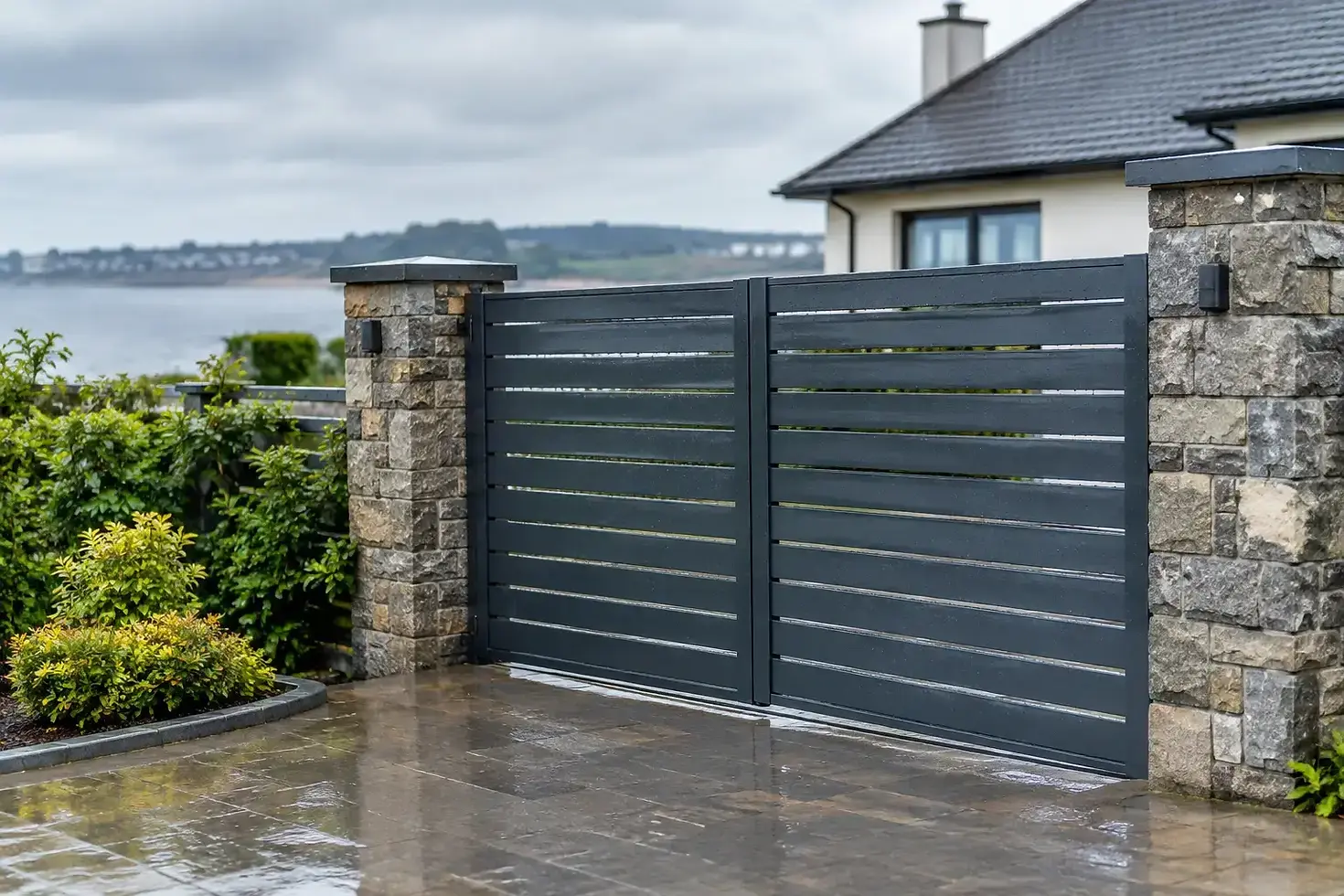
Side Gates That Stand Up to Dublin Weather
A side entrance is often the hardest-working part of a home, yet it is easy to ignore until the gate starts dragging, rattling in the wind or no longer shuts properly. Well-built side gates do more than close a gap between the house and boundary wall. They protect access to the back garden, keep bins and bikes out of sight, and give the property a neater, more secure finish.
For Dublin homes, the right gate needs to deal with regular rain, exposed conditions and everyday use. A cheap panel may look fine on fitting day, but weak timber, poor hinges or an unsuitable frame can quickly lead to sagging and movement. A made-to-measure gate costs more than an off-the-shelf option, but it is built around the opening and the conditions it will face.
What a good side gate needs to do
A garden gate should open and close cleanly without catching on paving, walls or uneven ground. It should sit square in a properly fixed frame, with enough clearance to allow for normal movement in the timber through wet and dry weather.
Security matters too, although the best solution depends on how the entrance is used. A side passage used daily needs a reliable latch or pad bolt that is easy for the household to operate. A gate protecting a seldom-used rear entrance may benefit from a more secure arrangement. The aim is not to overcomplicate it, but to fit hardware that suits the job and is solidly fixed.
Privacy is another practical consideration. A close-boarded gate gives better screening for a narrow passage or a garden overlooked by neighbours. Spaced boards can look lighter and allow airflow, but they offer less privacy and can be less suitable where pets or small children need to stay safely within the garden.
Why pressure-treated timber is worth choosing
Timber is still a popular choice for side access because it is strong, repairable and suits the look of most Dublin homes. The quality of the timber and the treatment process make a real difference to how long it lasts.
Pressure-treated Scots pine is treated to help resist rot, fungal decay and insect attack. The preservative is forced into the timber under pressure rather than simply brushed onto the surface. That protection is especially useful around side passages, where walls and restricted airflow can leave timber damp for longer after rain.
Treatment does not mean a gate will never need attention. Every timber gate benefits from sensible care, and cut ends or drilled areas should be protected during manufacture and fitting. But starting with pressure-treated timber gives the gate a far better chance against the Irish climate than untreated softwood.
A gate also needs enough timber in the right places. Thin boards without support can twist or loosen over time. Proper bracing helps keep the gate square, while a strong outer frame gives hinges and bolts something substantial to hold on to. We do not cut corners, we sand them - and those details are where a gate earns its keep.
Bracing is not just a decorative detail
The diagonal brace on a timber gate should run from the bottom hinge side up towards the top closing side. This helps transfer the gate’s weight back towards the hinge post, reducing the risk of the opening edge dropping over time.
It is a small point that is often missed on poorly made gates. If the brace runs the other way, it does little to support the weight. For a wide or heavy gate, additional framing and suitable heavy-duty hinges are equally important.
Made-to-measure beats making do
Many side passages are not standard sizes. Older homes may have uneven walls, sloping paving, pipework, awkward steps or a narrow opening between a house and shed. Buying a standard gate and trying to pack out gaps can leave an untidy finish and create weak points around the frame.
A bespoke gate is measured to suit the actual opening. That includes the width and height, the condition of the existing posts or walls, ground clearance, swing direction and where the bolt needs to land. If the old frame has rotted or moved, replacing it is usually the sensible option. Fitting a new gate into a failing frame is a short-term fix.
The opening direction deserves thought before work begins. In a tight passage, a gate opening outwards may block a path or a neighbour’s access. Opening inwards can be better, but only if there is room and it will not strike a bin, step or wall. A site check avoids finding this out after the gate has been made.
The fittings that prevent everyday frustration
The gate itself gets most of the attention, but the fittings determine how it feels to use. Galvanised hinges are a sound choice for exterior timber gates because they are designed to resist corrosion. They should be correctly sized for the weight and width of the gate, then fixed securely into strong timber or sound masonry.
A simple pad bolt is often the right answer for side access. It is practical, familiar and can be secured with a padlock where required. Depending on the layout, a ring latch, thumb latch or bolt can make more sense. The key is to avoid placing the fastening where it cannot be comfortably reached or where the bolt has nothing solid to close against.
Doorstops and catches may seem minor, yet they stop a gate from swinging too far and help it close consistently. On exposed sites, a good stop also reduces the chance of the wind damaging hinges or slamming the gate against a wall.
When replacement is the sensible choice
Not every old gate needs replacing. A loose hinge, worn bolt or flaking paint can often be repaired. However, there are clear signs that the gate, frame or both have reached the end of their useful life.
Look closely if the gate has dropped far enough to scrape the ground, boards are soft or splitting around screws, the frame is visibly leaning, or repeated adjustments no longer hold. Rot around the bottom of posts is particularly common because that is where water sits and timber receives the most abuse.
Trying to rescue badly decayed timber can become false economy. A new gate fitted to a square, reinforced frame is easier to operate, looks better and is less likely to need another call-out a few months later. If removal of the old gate and frame is needed, arranging it as part of the fitting work keeps the job cleaner and avoids leaving bulky waste at the side of the house.
A straightforward fitting process
A proper installation begins with the opening, not with a guess at a standard size. Clear photographs can often give a specialist enough information to provide an initial estimate, particularly when they show the full opening, the ground level and the surrounding walls or fencing. A final measure confirms the details before manufacture.
On fitting day, the old gate and frame can be removed where requested. The new frame is positioned square and securely fixed, with the gate hung, adjusted and tested. Hinges, brace alignment, clearances, bolt operation and the closing action all need checking before the job is finished.
A tidy installer will also clear the immediate work area. It sounds basic, but homeowners should not have to spend the evening collecting offcuts, loose screws or old timber after a gate fitting.
Simple care for timber side gates
A pressure-treated gate is built for outdoor use, but a few small checks will help it stay that way. Keep soil, leaves and plant pots away from the bottom edge so moisture is not held against the timber. Trim back climbers and hedges that trap dampness or force the gate out of line.
Once or twice a year, check that hinge screws remain tight and that the gate still clears the ground. A light lubricant on moving metal parts can prevent stiffness. If you choose to paint or stain the gate, use a suitable exterior product and allow treated timber to dry properly first. Painting is about appearance as much as protection, so it should not be used to hide soft or damaged timber.
The Side Gate Man makes and fits made-to-order timber gates for homeowners who want the work measured, built and finished properly. Whether the opening is narrow, uneven or exposed, the best result starts with a gate designed for that exact space - then fitted with the same care that went into making it.



Comments